



How to Become a Main Street Program in New Mexico
New Mexico MainStreet is a designated Main Street America™ State Coordinating Program and a program of the New Mexico Economic Development Department. Since 1985 we have worked with 95 New Mexico communities, and today support 32 state-designated MainStreet programs and 13 state-authorized Arts & Cultural Districts.
Getting there is a staged process, and that is by design. Communities complete real projects and build real partnerships before taking on the responsibilities of a designated program. Every community pursuing Main Street America designation starts with a NMMS Project-Based Initiative.
How long it takes depends on where you are starting. An established organization with an active board, staff, and a working relationship with its municipality can move through the stages faster than a community building from scratch.
Before You Apply
- Contact Lucas Pedraza. NMMS Project Coordinator Lucas Pedraza is the first point of contact for every community interested in a Project-Based Initiative or MainStreet designation. A conversation about your capacity and project ideas will save you time later.
- Build a stakeholder group representing the business district you want to focus on.
- Identify a project. Placemaking, façade improvements, historic preservation, property redevelopment, business development, creative economy, promotion. Projects must demonstrate job creation, business development, private-sector investment, or improvement to your community’s economic environment.
- Secure local government support. A local government representative must sign your application.
- Submit the application. Rolling basis, though technical assistance has to be scheduled with NMMS staff.
A note on population: Communities and tribes of any size can apply for a Project-Based Initiative. For designation, communities under 50,000 may have only one Main Street America program; communities over 50,000 may have more than one, with local government support.
Stage 1: Project-Based Initiative, Round 1
12 to 18 months
NMMS meets with your stakeholder group and local government partner to refine the project scope and assign a lead Revitalization Specialist. Together you set a scope of work, timeline, and metrics.
You then implement the project with NMMS technical assistance at no cost, and submit a final report on outcomes. When funds allow, NMMS works with nonprofit partners to provide a small seed grant to help fund project implementation.
If you are not pursuing MainStreet designation, you are done. If you are, tell NMMS leadership and keep going.
Stage 2: Project-Based Initiative, Round 2
12 to 18 months
This is where a project becomes a program. Revisit your stakeholder group so it represents the district you want designated, then apply to develop an Accelerator Action Plan — the roadmap for your Accelerator years. Working with a NMMS Organization Revitalization Specialist, engage your district’s stakeholders and build a plan around local priorities and the NMMS Accelerator Benchmarks. Most communities take on a second project at the same time.
Some communities are asked to complete a second project BEFORE starting the action plan, if more local capacity needs to be built first.
Three things must be in place before you can enter the Accelerator:
- A Memorandum of Understanding signed by NMMS, your organization, and your local government partner
- A resolution of support adopted by your city council, county commission, or tribal council
- A $20,000 service contract with your local government partner, or proof one is in process
The service contract provides the funding to establish your nonprofit organization. Deliverables should include your Accelerator Benchmarks, the tasks in your action plan, and local priorities.
Stage 3: The NMMS Accelerator
12 to 18 months
An assigned Revitalization Specialist guides you from trainings through graduation. NMMS pays your organization’s Main Street America™ membership. During the Accelerator Process, your organization will:
- Complete Trainings on the Main Street Approach™ and each of the Four Points — Organization, Economic Vitality, Design, Promotion.
- Implement the Accelerator Action Plan which includes Benchmarks across six goal areas: organizational development (including 501(c)(3) status, board, policies, staff), partnerships, communications and outreach, district promotion, business development, and physical improvements.
- Utilize Technical Assistance across all Four Points to assist with implementation of the Accelerator Benchmarks, requested via the NMMS Service Request Form.
You report progress quarterly and participate in the NMMS Annual Program Review each fall — the formal check-in on progress toward completing the NMMS Accelerator Benchmarks. When the benchmarks are met and your local government partner commits to entering into a service contract with your organization, you become a state-authorized Main Street™ program and Main Street America™ Affiliate, recognized at the next NMMS state-wide meeting (NMMS Winter Conference or Summer/Fall Institute.
Stage 4: Main Street America Affiliate or Accredited Program
Designated programs implement the Main Street Approach™ through Economic Transformation Strategies and an annual work plan with projects in each of the Four Points, and are evaluated each year against Main Street America™’s Community Evaluation Framework Standards. Affiliate programs can apply for NMMS capital outlay for public infrastructure project planning; Accredited programs can apply for public infrastructure project construction.
The Local Financial Commitment
This is a public-private partnership. Your local government partner agrees to support the revitalization work through an annual service contract that outlines the deliverables the local MainStreet program will provide in exchange for the contract funding. The required contribution scales with community size.
| Community population | Under 5,000 | 5,001–15,000 | 15,001–50,000 | Over 50,000 |
|---|---|---|---|---|
| Accelerator designee | $20,000 | $20,000 | $20,000 | $20,000 |
| Designated MainStreet program | $26,000 | $46,000 | $52,000 | $79,000 |
FY2026-FY2028 figures
Tips for Making It Through
Contact NMMS before you do anything else.
NMMS Project Coordinator Lucas Pedraza is where every prospective community starts. Schedule a meeting to learn the process and identify your actual next step — communities that begin with a conversation waste far less time than those that begin with paperwork or by launching a program without understanding the process first.
Put your energy into stakeholders and your local government relationship.
A committed group of stakeholders and a local government partner who understands the work will carry your community further than anything else. Both relationships need ongoing attention — elected officials and city staff change, and support has to be rebuilt when they do.
Don’t get too far ahead of yourself.
Resist the urge to incorporate a 501(c)(3), hire staff, or make big financial commitments BEFORE you have contacted NMMS, submitted a Project-Based Initiative application, or initiated your approved project.
Two Project-Based Initiative rounds before the Accelerator is not a hurdle; it is the path to build capacity and success. Communities that come through this pathway enter the Accelerator with completed projects, working partnerships, and a track record of success.
Capital outlay is a perk, not the point.
It takes years of community-driven work before your organization is state-designated and eligible for NMMS Public Infrastructure Capital Outlay funds. The funding is a real benefit, but MainStreet programs achieve far more than that.
Know the branding rules.
Until you are accepted into the Accelerator, you cannot use “NM MainStreet,” the NMMS logo, or any form of “MainStreet” in your organization’s name, URL, social handles, or printed materials. Once you enter the Accelerator, NMMS covers your Main Street America membership and you can begin using “MainStreet” in your organization’s name — while still identifying as “A NMMS Accelerator Process Designee.”
A full MainStreet program isn’t right for every community.
It is not always attainable or sustainable, and that is a legitimate answer. Project-Based Initiatives exist specifically to support communities that may never have the capacity or desire to run a state-designated MainStreet program. Ask us about other ways to engage.
Ready to Start?
Start with Lucas Pedraza, NMMS Project Coordinator. He is the first point of contact for all communities interested in becoming a Project-Based Initiative or working toward establishing a state-designated MainStreet program.
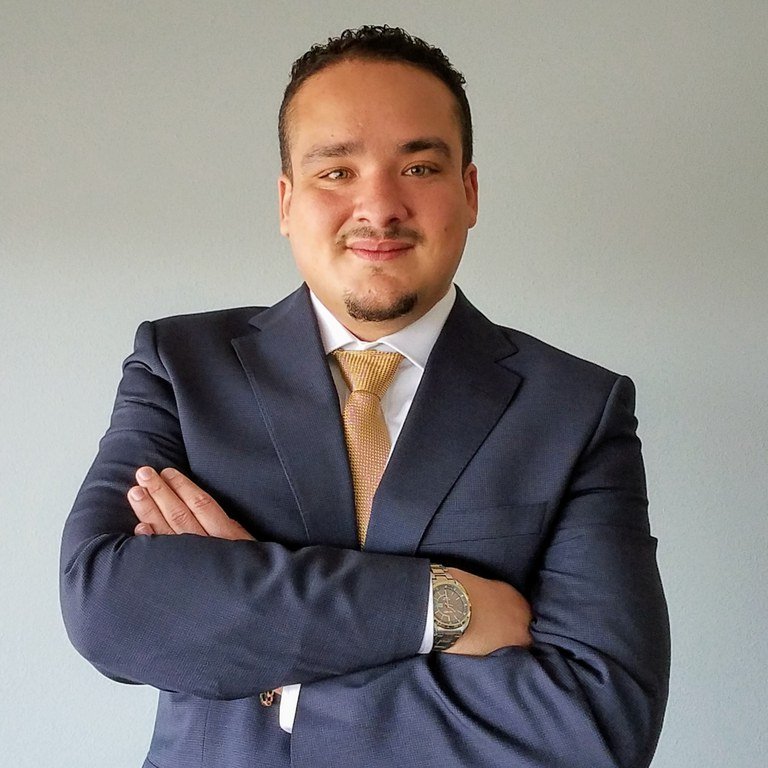
Lucas Pedraza
NMMS Project Coordinator
lucas.pedraza@edd.nm.gov
(505) 412-3963